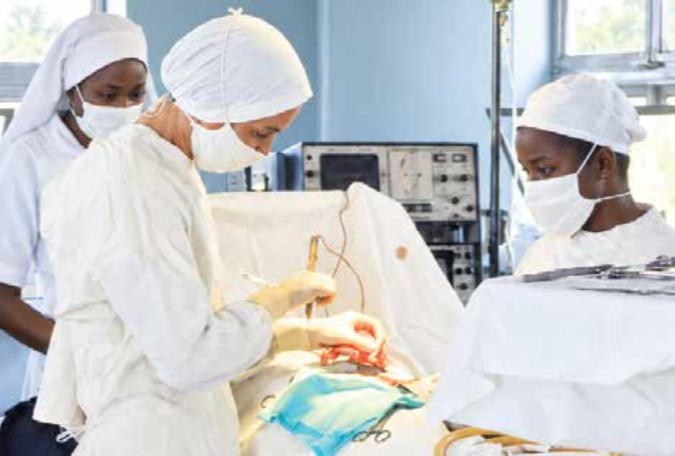
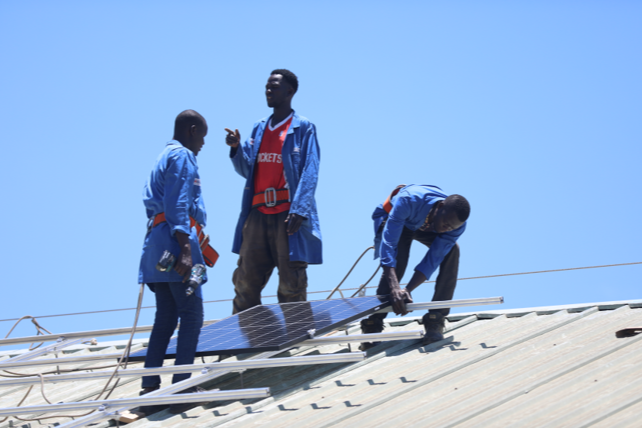
As climate issues take on increasing importance, Lacor Hospital is taking a significant step forward with the installation of solar power systems at its three outlying health centres.
At a time when the world is increasingly aware of the urgent need to act for the climate, Lacor can share a concrete step forward: photovoltaic systems are now active in Lacor Hospital’s three peripheral health centres, Amuru, Opit and Pabbo, providing clean and stable energy for health services.
The systems were designed to power the strictly clinical areas of the centres: outpatient clinics, laboratories, pharmacies, delivery rooms, and essential patient services. Each system has a capacity of about 7 kWp and is equipped with lithium storage batteries of around 16 kWh. Today, solar energy covers more than 90% of the energy needs of the clinical areas, ensuring continuity of care even in the evening, at night, and during emergencies.
The energy produced supports essential daily activities: from lighting clinical spaces to operating laboratory equipment, from maintaining the cold chain for vaccines and medicines to using diagnostic tools such as ultrasound machines. In contexts where the electricity grid can be unstable, having reliable energy means making services safer for mothers, children, and all patients who come to the health centres seeking care.
“Ensuring stable energy in peripheral health centres means making patient care safer and more continuous. Over the years, Lacor has pursued a broad environmental commitment, from solar energy to waste management, from water treatment to rainwater harvesting. We hope to continue along this path, increasingly extending sustainable solutions to other areas of hospital life and its health centers,” explains Jacopo Barbieri, Director of Lacor’s Technical Department.
This initiative shows that protecting the planet also means making concrete choices within essential services: at Lacor, cleaner energy means safer care, continuity of services, and a lower environmental impact.