Our Story
Our foundation’s story is fairly recent. It began in 1995, when Lucille Teasdale, who was seriously ill, established a foundation in Montreal to help support and perpetuate her work in Uganda. However, there are fascinating chapters that came before, including the establishment of a hospital in colonial Africa and the serendipitous meeting of Lucille Teasdale of Montreal and Piero Corti of Milan.
Lucille meets Piero
In the late 1950s, Lucille Teasdale meets Piero Corti at Sainte-Justine Hospital in Montreal. Both chose medicine to help people in need. Lucille, one of Montreal’s first female doctors, is finishing her pediatric surgery studies, while Piero, trained in child neuropsychiatry and radiology, is completing his internship.
Back in Italy, Piero completes his training, then travels through Africa and India before settling at St. Mary's Hospital in northern Uganda. As he prepares the first shipment of medical supplies, he receives a postcard from Lucille, who completes her specialised medical training in France. He invites her to join him— “Just for a couple of months to start the surgical activity; as we are short of funds, I can only cover your plane ticket.”
Their Dream and Legacy
Their dream— “To offer the best possible care, to the greatest number of people, at the lowest cost” and “to train those who would take their place”—remains at the hospital’s heart.
They marry in 1961 and devote their lives to leading and expanding St. Mary's amid repeated coups, conflicts, extreme poverty, and devastating epidemics. Lucille dies in 1996 from HIV contracted at work; Piero follows in 2003 from pancreatic cancer. They do not live to see peace reach northern Uganda in 2006 or the return of nearly two million displaced people.
Each founds an organisation in their hometown—the Teasdale-Corti Foundation in Montreal and the Piero e Lucille Corti Foundation in Milan—to raise funds so the hospital can continue treating the poor through Ugandan colleagues who carry on their work and dream. Lucille and Piero now rest within the hospital grounds, as Piero said: “So I can watch over and tug the ears of those who misbehave.
Founding of St. Mary’s Hospital
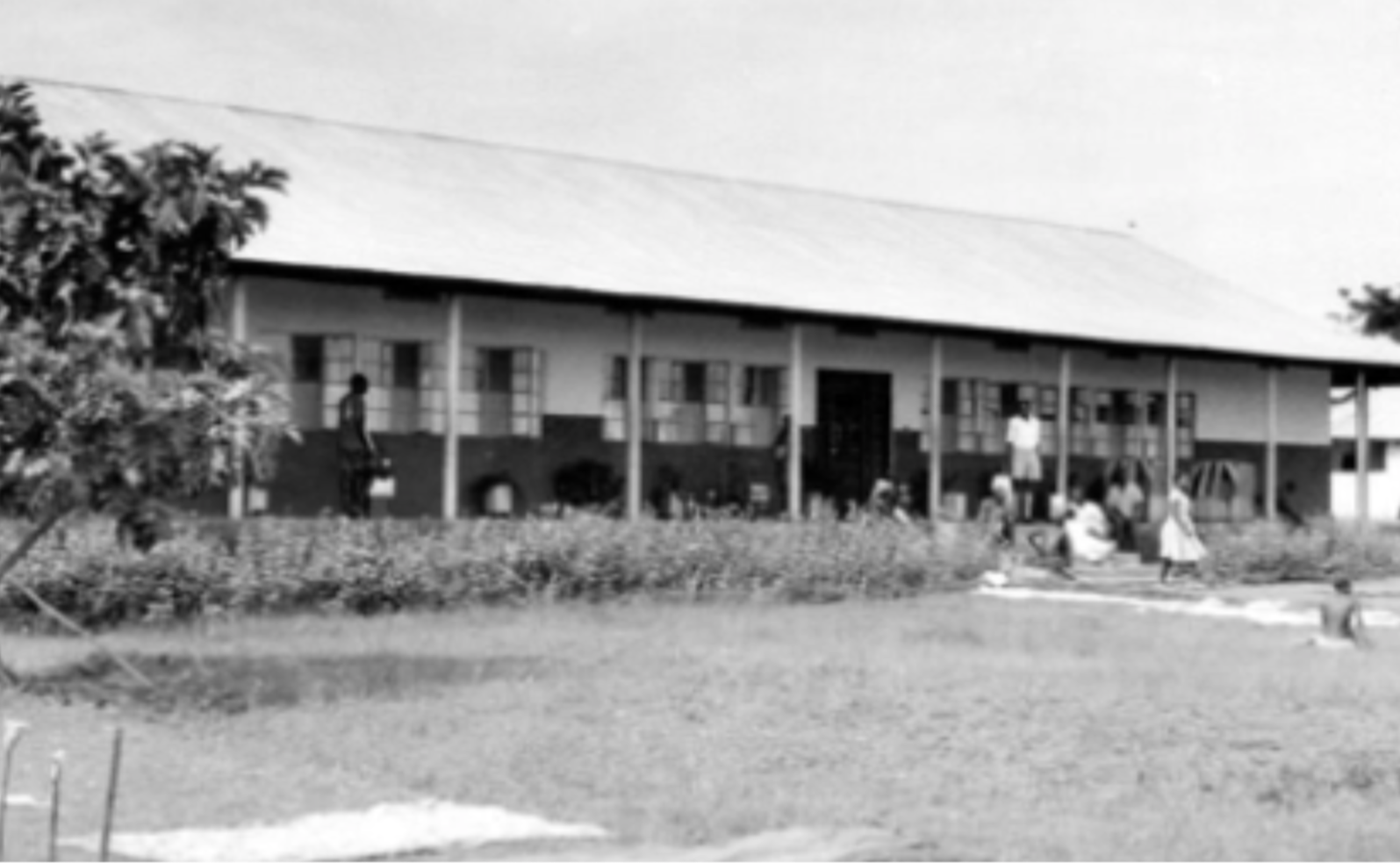
In 1959, near Gulu in northern Uganda, a Comboni missionnary with Comboni sisters found St. Mary's Lacor Hospital. For over 65 years, it has been transforming thousands of lives.
Comboni Missionaries arrive in the region in 1910 under Gulu’s Catholic diocese. In 1961, Doctors Piero Corti and Lucille Teasdale arrive and assume leadership to operate and expand the hospital.
St. Mary’s Hospital Development
The hospital’s growth tells the extraordinary story of Lucille Teasdale and Piero Corti. In 1961, upon their arrival, it consists only of an outpatient clinic and a 30-bed maternity ward—run by Italian Comboni sisters, UK-trained nurses and midwives (Uganda is still a British protectorate), and a few locally trained Ugandans. Medicine, radiology, and lab services are under construction.
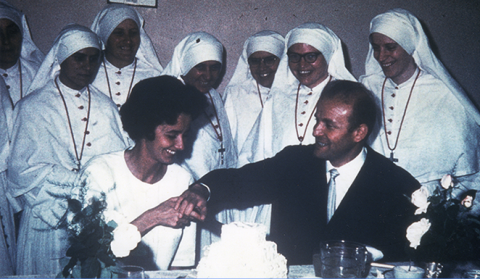
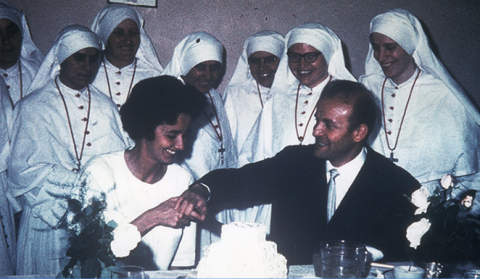 Piero and Lucille marry in the hospital chapel. They will stay at St. Mary’s for life; their only daughter, Dominique, is born there in 1962.
Thanks to them, the hospital expands. As agreed with the bishop, Piero seeks funding from family and friends, not from the diocese. By 1965, the hospital adds pediatrics and a two-table operating room where Lucille trains young Italian doctors sent by Italy’s Foreign Ministry for their 2-year civilian services, instead of military duty. They spend three months at St. Mary’s learning local tropical diseases before being assign to others of the 25 Comboni hospitals in northern Uganda.
On-Site Staff Training in crisis
On-site training of local staff—one of their great dreams—starts with the registered nursing school in 1973. Between 1974 and 1976, three peripheral health centers open in remote ;areas: Opit, Pabbo, and Amuru.
Under Idi Amin (1972-1979), Uganda’s economy collapses—Asians expelled, businesses and industries nationalised, all who can flee do so. Salaries love 90% of their value in under a decade. In 1979, after Amin’s provocations, Tanzanian forces with Ugandan exiles invade Uganda and overthrow Amin’s regime. It takes months to reach Gulu; the hospital stays isolated and lies directly on Amin's retreating army's path. Looters raid it just before Tanzanians arrive. A Tanzanian officer tells the Cortis: “This is the first health facility I’ve found open and functioning since entering Uganda months ago.”
Locals affectionately call Lucille “Dr. Lucille”. She is the only surgeon of the whole region able to perform was surgery. In those years, Lucille contracts AIDS by cutting herself on bone splinters during operations.
Challenging 1980s and 1990s
Despite ongoing insecurity, the 1980s bring expansions: a second surgery ward, restructured operating theater, and new services like dental surgery, endoscopy, pathology, and physiotherapy.
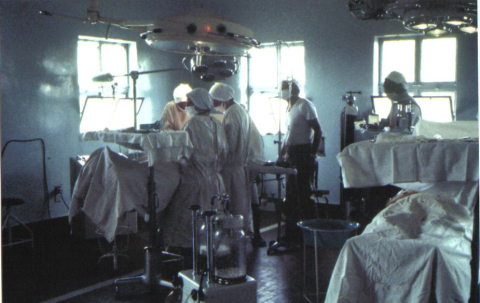 The hospital sits amid war with daily massacres. It treats direct victims—gunshot, mine injuries—and indirect ones: children with "diseases of poverty". Ages 0-4 are 17% of the population but 50% of admissions and 60% of acute deaths from malnutrition, malaria, pneumonia, diarrhea, measles. Rebels loot at night; nurses are kidnapped, ransoms paid in drugs and cash. Over 90% of staff live on-site; many sleep in bushes or construction sites to avoid abduction.
In the 1990s, the hospital employs 400 Ugandans with 450 beds. In 1995, a new polyclinic opens, accounting systems launch, and annual financial reports begin. The boards renew and have been meeting regularly since.
Mid-1990s rebels target civilians: night raids kill, loot, abduct children aged 6-12. Subsistence farmers flee to cities or military posts, crowding vast internal refugee camps reliant on international aid like the World Food Programme for two decades. Those near towns send women and children to safer spots like cities or missions at night. From 1994 to 2006, between 3,000 to 15,000 (per “morning counts”)—mostly women and children—shelter nightly in the hospital against raids, killings, and kidnappings.
Lucille’s Illness
Living with AIDS Lucille works long hours at the polyclinic despite weighing 35 kg and relying on intravenous feeding. In April 1996, Piero takes her to Italy, hoping to improve her health. Despite treatment, Lucille's health deteriorates, and she dies in Italy on August 1, surrounded by Piero, daughter Dominique and her husband Contardo, and Lucille's sister Lise from Canada. Piero brings her remains back to Uganda.
Growth in Wartime
Despite—or because of—war, as the only fully functional facility in a vast region, the hospital grows to meet rising needs. Patients increase from 109,480 in 1990 (8,729 admissions) to 196,478 in 2000 (17,065), then 331,346 in 2020 (50,386).
Generational Shift
After Piero’s death, Dr. Bruno Corrado, who arrived in 1992, leads and collaborates with Ugandan colleagues as future directors. The formal handover occurs in February 2008: Dr. Cyprian Opira becomes Executive Director, supported by Dr. Emintone Odong (Medical Director) and Dr. Martin Ogwang (Institutional Director). After Dr. Opira's passing in late 2024, the Board of Directors formalizes the hospital’s top management structure, the Internal Management Board (IMB), which includes the following five Board-appointed positions: the Executive Director (at present vacant), the Medical Director (Dr Odong Emintone, at present chair of the IMB with all the ED powers), the Institutional Director (dr Martin Ogwang), the Scientific Director (Dr Emmanuel Ochola) and Mr Piero Paul Ocaya (Administrator).
Dr. Dominique Corti, Lucille and Piero’s daughter, chairs the Milan Foundation, serves as Montreal Foundation Programs Vice-President, and supports St. Mary's via both foundation and hospital board membership.
In 2000, St. Mary’s makes global headlines amid the ebola outbreaks. Dr. Matthew Lukwiya, and oustanding doctor and worthy successor to Lucille and Piero, identifies the epidemic, alerts the authorities, and organises containment—setting up an isolation ward, recruiting staff volunteers, and hosting experts from the CDC’s Special Pathogens Unit and WHO. The CDC sets up an "on-site" laboratory at St. Mary’s, allowing—for the first time—local observation of the epidemic and confirmation of ebola diagnoses.
Dr. Matthew continues leading and encouraging his volunteer team to care for ebola patients. Previously, due to high mortality and no effective treatments, isolated patients were cared for by relatives. Dr. Matthew justifies this change with three reasons: "First, we don't know if supportive care can make a difference, and it is our duty to try. Second, it is our duty as health professionals to protect the people. It would be much more dangerous for a family member to learn how to dress and undress with protective clothing and avoid dangerous actions. Third, if I were dying of this disease, I would want someone beside me to avoid dying alone. This is our duty."
Of the over 100 volunteers handling cases, transport, and burials, 13 die from contracting the disease. Dr. Matthew also dies of ebola on December 5, 2000—the last victim among St. Mary’s staff. In his final moments, he asks to be buried near Lucille and was honored in his last wish.
Ebola leaves fear and discouragement. Months later, the hospital resumes full operations, however, with stricter protections, screening, and less material reuse—driving up costs.
Modernized Management
Since 2001, international auditors verify finances. The hospital introduces a staff manual, computerises accounting and human resources, and handles a surging number of night commuters (thousands of children shletering nightly).
It develops its first strategic plan for 2007-2012, renews it every five years, and holds annual stakeholder consultations.
Recognized Expertise
As mentioned above, the Hospital, under the leadership of Dr. Matthew Lukwiya, attracted worldwide attention in 2000 as well as experts who helped contain the ebola outbreak.
In 2003, Gulu gains Uganda’s third public medical school; St. Mary’s becomes its clinical teaching site. Patients exceed 300,000 yearly during three years (2007-2010), with 40,000-50,000 admissions; surgeries top 5,000 in 2010.
Nursing and medical trainees from Canadian and Italian universities visit Gulu, contributing to achive the mission while learning tropical medicine basics. Some pursue international development careers; other treat tropical diseases in travelers back home.


