This year, we brought forward our usual journey to Lacor for the end-of-year Board of Directors meeting. These days mark the fifth anniversary of our legendary Brother Elio Croce’s death.
Brother Elio Croce (1946–2020), an Italian Comboni missionary, devoted 49 years to St. Mary’s Lacor in Uganda, building infrastructure and training locals in technical trades. Amid wars and epidemics, he saved lives with his Toyota and founded an orphanage and a home for people with disabilities.
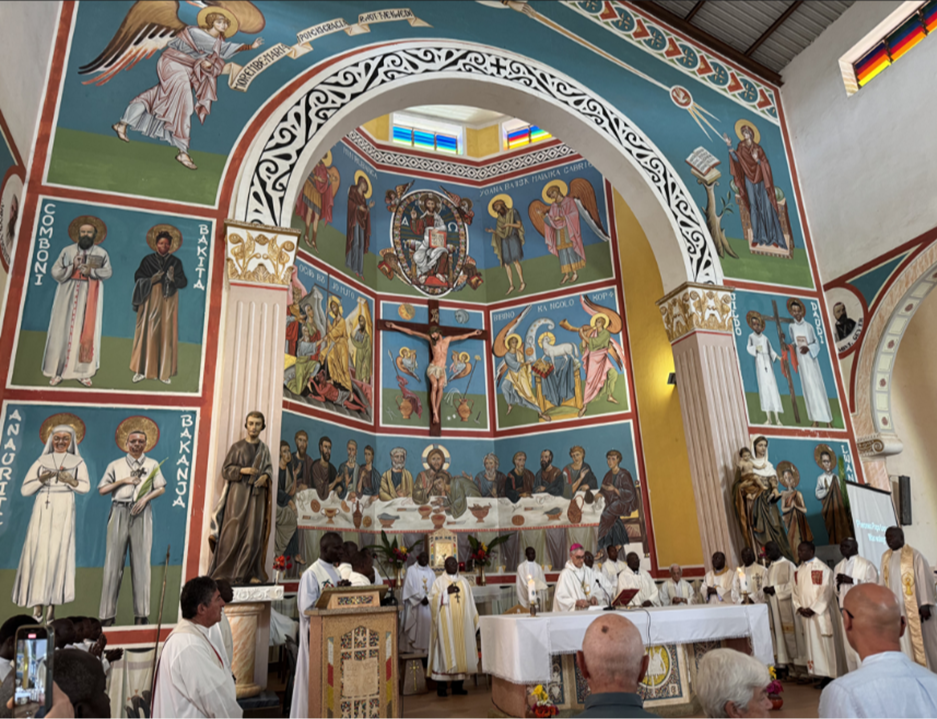
A large memorial ceremony was organized at the nearby church he built and named after St. Daniel Comboni.
The church had become necessary due to the flourishing of a large cluster of huts, shops and small businesses around Lacor Hospital.
 Although built on a tight budget, it turned out to be quite large and, thanks to local and volunteer Italian artists from Trentino, also magnificently frescoed. The Archbishop Emeritus John Baptist Odama told everyone that at the time, when he athorized Brother Elio to build the church, he had requested that it should not be larger than the Gulu cathedral. He knew full well that for Brother Elio, one brick led to another. On the other hand, the large size also ensures excellent ventilation, which is essential in this climate.
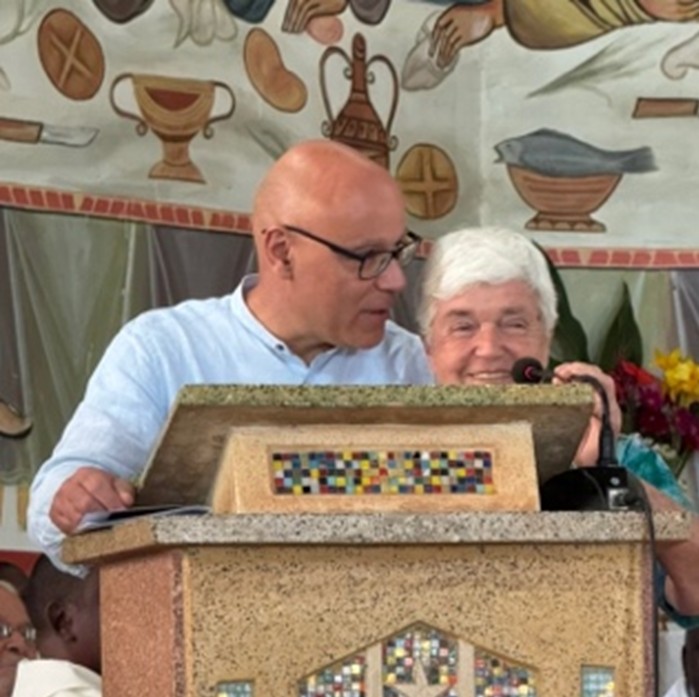
The celebration lasts all day. Brother Elio's family members from Moena have also arrived (his sister Maria and nephew Felice are pictured).
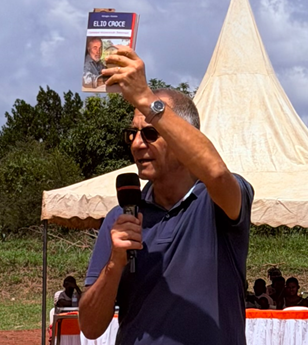
Dr. Filippo Ciantia, who has worked many years in Uganda, presents his english version biography on Brother Elio to the community.
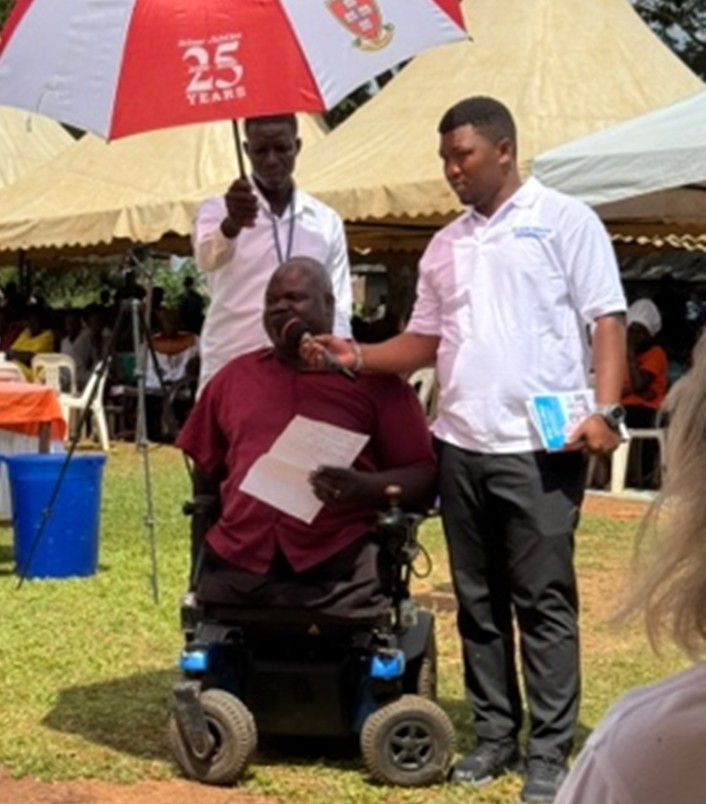
 After the long, colorful and musical ceremony (Masses here are truly a joyful gathering of the community), a series of warm commemorations rich in personal memories follows on the lawn in front of the church.
Like George’s, below. As a child, he lost both his legs and his right arm to an antipersonnel mine. Taken in by Brother Elio at the orphanage, he studied computer science and now works for Lacor. He got married last year.
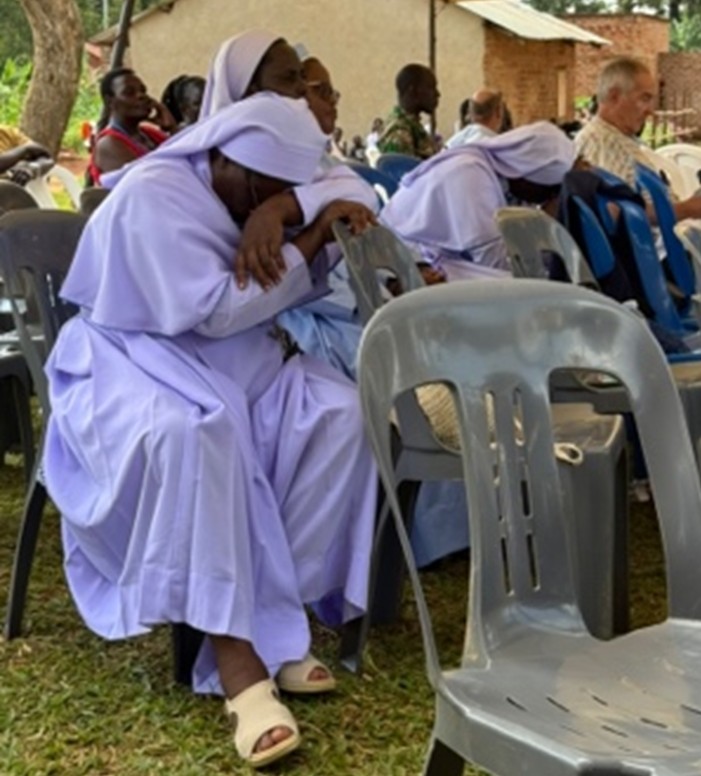
But the heat and the length of the event wear down even the most resilient Ugandan nuns, despite their being well accustomed to local ceremonies.