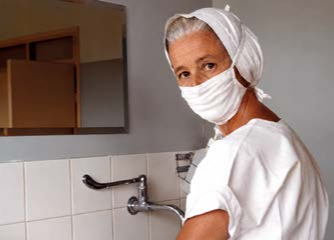
August 1st will mark the 30th anniversary of my mother's death. It was in 1996, in the midst of the guerilla war. Every evening, up to 15,000 people sought refuge on the grounds of Lacor Hospital to escape the raids by rebels of the Lord’s Resistance Army, who were looting and killing with impunity.
Despite the serious security situation, hundreds of people attended my mother’s funeral. She was buried in the heart of the hospital, beneath the grotto of Our Lady of Lourdes, thus inaugurating this place which later welcomed Dr. Matthew, who died of Ebola in 2000, my father in 2003, then Brother Elio, who succumbed to COVID, and Dr. Cyprian Opira, who had succeeded Dr. Corrado as head of the hospital.
Much has changed in 30 years. Peace has allowed for a very slow socio-economic recovery, which has not yet made up for the ground lost to the rest of the country during the 26 years of regional guerrilla warfare. We are seeing the emergence of population groups enjoying greater prosperity (and new expectations), but vast pockets of poverty and extreme poverty remain. The hospital, which weathered the storm of the darkest years, has more than doubled in size, always striving to adapt to the needs of the population. Today, it faces new challenges imposed by the gradual evolution of the social context and disease patterns—chronic illnesses are beginning to rise—as well as by growing technological needs.
The Hospital must adapt to the changing times if it is to remain true to its mission. Here, modern medicine must be reconciled with limited resources. Clinical judgement, based on the doctor’s diagnostic skills, remains paramount, even as the organization grapples with the impressive—and extremely costly—advances in the latest diagnostic and therapeutic tools.
From the very beginning, Lacor Hospital has placed great importance on training, encouraged and developed by my parents, from the nursing school right through to the establishment of the Gulu Faculty of Medicine, of which Lacor Hospital is one of the cornerstones. The context remains extremely poor and the technologies are not those of high-income countries, but Lacor Hospital is a well-established "system" where serious medicine can be practised and where a doctor can enrich his or her experience, honing qualities often overshadowed today by hyper-technology. These qualities are also sought after in our part of the world, which is why the University of Sherbrooke and certain Italian universities are keen to send students and doctors specialising in various fields for an internship that is both unique and invaluable.


