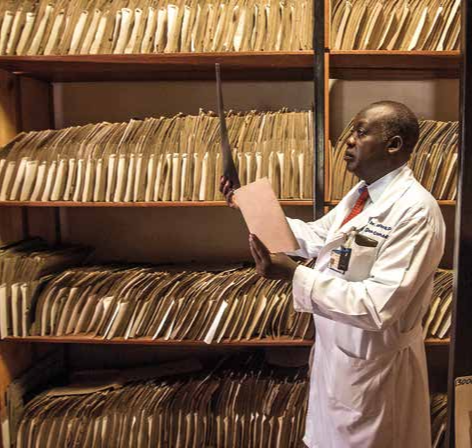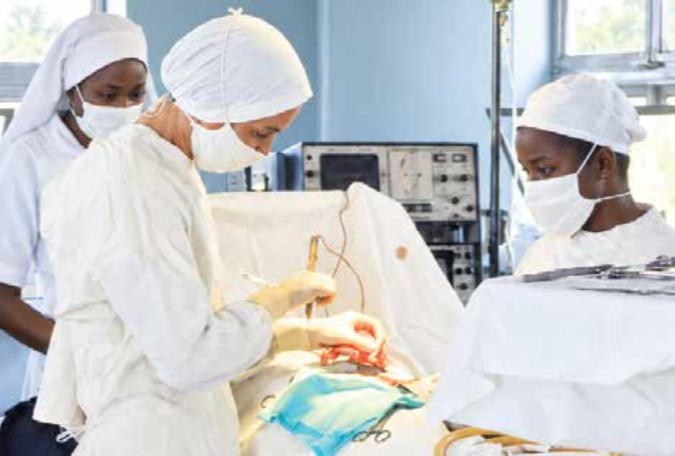
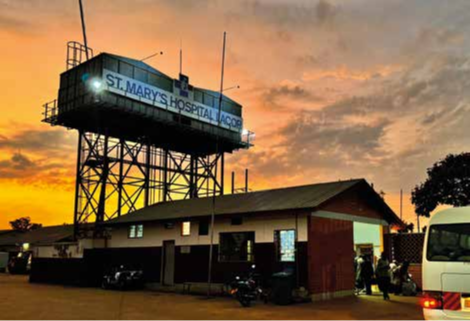
If all is working well, no one notices its existence. But if something fails, its importance comes to the fore. The Technical Department, led by Engineer Jacopo Barbieri, is the Hospital's nervous system.
Even in Africa, a Hostpital is a complex system in which all parts must work at their best.
According to a report by the World Health Organization (WHO), Africa is a graveyard for medical equipment: whether purchased or donated, nearly 80% of it becomes unusable within six months due to a lack of maintenance, spare parts, or consumables.
This is not the case at Lacor Hospital. Why? We have asked the question to Engineer Jacopo Barbieri, Director of the Technical Department.
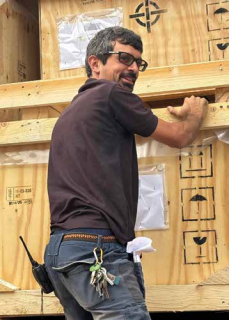 « In my previous experiences in Africa, I often had to manage short-term projects. When I arrived at Lacor in 2019, I discovered a hospital that had been in operation for over sixty years and was remarkably complex.
Also, thanks in part to the philosophy of the Corti Foundation, which supports the hospital with clear and consistent objectives by bridging gaps in the funding of operating expenses, it is possible to plan long-term strategies rather than limiting ourselves to emergency measures. »
Despite the challenges posed by limited resources, everything is running smoothly at Lacor thanks to its Technical Department, which supports the efforts of the medical and nursing staff to ensure quality care for the community.
« My team ensures the smooth operation of the operating theaters, the radiology department, the laboratories, the oxygen system, and all clinical equipment, as well as the the civil infrastructure.
We must ensure a continuous supply of electricity (more than 1,200,000 kWh per year) and drinking water (more than 300 m³ per day), as well as the construction and maintenance of buildings (approximately 190,000 m²), internal roads, the sewer system, the vehicle fleet, and the waste management system. »
How many employees are needed for all this work?
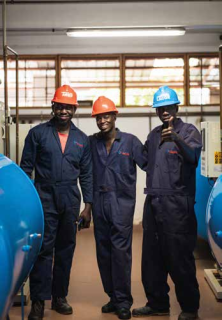 « The department is divided into two sections. The first, headed by engineer Uma Santo, handles energy and biomedical equipment. It includes three biomedical technicians, three electricians, three operators for the oxygen system, and five staff members responsible for wastewater treatment and waste disposal.
The second section, led by Antony Okullu, handles carpentry, plumbing, mechanical work, masonry, general maintenance, and landscaping, with about 50 employees. »
Unlike in North America, all work must be done in-house, as there are no local companies able to provide these services. Managing inventories of tools and materials is also crucial, as is analyzing the costs and quality of the products to be purchased.
« In a hospital, technical support must be available around the clock: just as there is a surgeon on call, there is also an electrician on call. It’s a huge amount of work. »
You arrived at Lacor when the Technical Department was led by Brother Elio Croce who practically built the whole hospital. How was it to work with him?
« Elio was a legend; he had a unique passion and dedication. He deeply loved the local people, and everyone loved him. Working with him wasn’t always easy, since he often gave orders without much explanation, but he was extremely intelligent and reasonable. He possessed—a natural gift, honed by his years in Africa—an incredible ability to adapt to problems and come up with improvised solutions, which may not always have been conventional, but were always highly effective. »
Since your arrival at Lacor, what have you accomplished?
« Over the past five years, we have installed a new generator and upgraded the UPS system, which ensures uninterrupted power supply in the event of a national grid outage. We have commissioned three new radiology machines and modernized the sterilization department by adding two new machines and refurbishing two others. We replaced the operating tables and lights in all seven operating rooms and renovated the hospital incinerator, thereby reducing costs and harmful emissions.
In September 2023, we opened a new neonatal unit, built entirely in-house by our own team.
We also built a residential complex with 67 apartments to replace the old housing units constructed during the war to provide safe accommodation for nurses. »
The work done and the outcomes are impressive, however difficulties and challenges certainly still exist.
« Difficulties and challenges are the only things we have in abundance. The greatest challenge today is anticipating future needs to guide our strategic decisions. We must also train the next generation of technically skilled "middle managers" who are professionally independent and strengthen workplace safety. But while obstacles abound, we can see the results with our own eyes, and that is the greatest reward.
And the best source of encouragement. »
— Eng. Jacopo Barbieri, Director, Technical Department