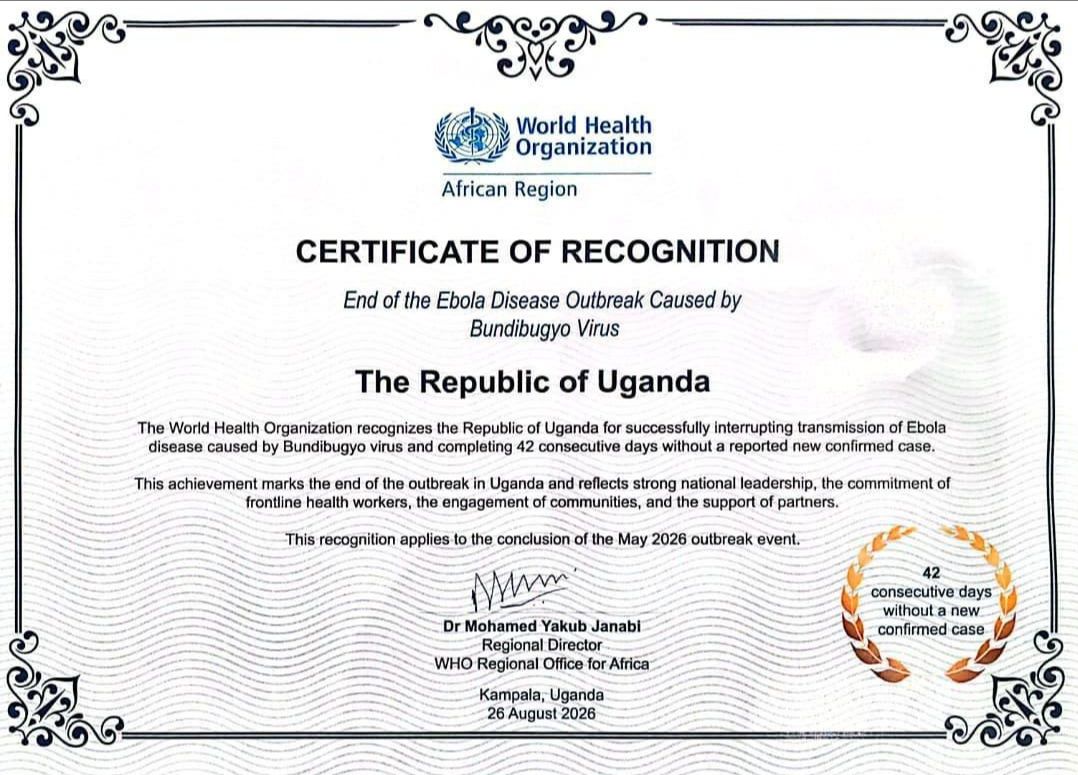
On August 26, 2026, the World Health Organisation declared the Ebola outbreak in Uganda to be over (see the image).
At Lacor Hospital, everyone is extremely relieved, but the level of vigilance remains high, as indeed it does throughout the rest of the country, particularly along the western border with the Democratic Republic of the Congo (DRC), where the situation remains very serious. Some of the worst-affected areas are a five-hour drive from the hospital.
Having recalled its residents and trainees at the start of the pandemic, some Italian universities, as well as the University of Sherbrooke, have already given the go-ahead for internships to resume. Dr Youri Élément, who is in charge of internships at the University of Sherbrooke until Dr Ann Isabelle Grégoire returns from parental leave, is planning the first intern cohort for mid-November.
Unfortunately, the situation across the border in the Democratic Republic of the Congo is not improving.
On May 14th, the DRC confirmed eight cases of Ebola, which were classified the next day as of the Bundibugyo strain. On the same day, Uganda reported its identification of an imported case, epidemiologically linked to the ongoing outbreak in the neighbouring country.
Uganda has reported 20 confirmed cases, including 15 imported cases and five secondary infections amongst contacts and healthcare workers, as well as two deaths amongst the confirmed cases. Importantly, no community transmission has been documented in Uganda. The response has been based on the rapid detection and isolation of cases, contact tracing, laboratory confirmation, infection prevention and control in healthcare settings, the safe management of cases and close monitoring of cross-border movements.
Although transmission has ceased in Uganda, the risk of new imported cases remains. Uganda is therefore maintaining enhanced disease surveillance, particularly in healthcare facilities and areas with significant cross-border movement. The WHO and its partners also continue to support cross-border coordination, community mobilisation and regional preparedness. The focus has thus shifted from active outbreak control to maintaining the capacity to rapidly detect any new suspected or imported cases, carry out the necessary investigations and ensure they are managed safely in order to prevent further transmission.
Uganda and the DRC have signed a joint cross-border response agreement. The Government of Uganda has set up two mobile laboratories and an 80-bed Ebola treatment unit in Aru and Kasenyi, in the east of the DRC.
Interesting reference:
A report (in French) from France Culture on the political dimension of the epidemic in the DRC.


